BEST GAMES

Little Misfortune

Fran Bow 4

Little Misfortune 2

Among the Sleep
SIMILAR GAMES

Little Misfortune Full Game

Night in the Woods

Little Nightmares 2025

Sally Face






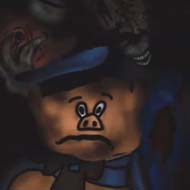

Skinface looks like a short stealth game set in an apartment building. What it actually demands is a cold, methodical patience: you are an assassin, your target lives in apartment 6 on the fifth floor, and the only way through that door is to show a face the resident trusts. The face does not belong to you. You will need to take it from the other residents first.
The core of Skinface is face assembly. The target — the resident of apartment 6, floor 5 — will only open the door to someone who looks like James, a face made by combining pieces collected from other residents in the building. You move through the L-shaped apartment complex, locate residents, take what you need, and piece together the right combination. The game does not explicitly show you what James looks like in the opening minutes, which means your first run often involves trial-and-error collection before you understand what combination you actually need. This is intentional — the confusion of your first pass through the building mirrors the disorientation of the character you are playing.
Face pieces are not just one item. Different facial features — including nose piercings, which multiple players have noted are genuinely difficult to spot in the PSX-styled visual environment — come from different residents, and each piece needs to be collected without alerting the police officer who patrols the building. The officer cannot be fought. You walk away from him, use the L-shape of the building’s corridor layout to cut off sightlines, and wait for patrol windows. Players who try to rush face collection without accounting for the officer’s position consistently get caught before they have all necessary pieces.
The PSX aesthetic — low-resolution textures, limited draw distance, the characteristic slight visual noise of that era — does specific work here beyond atmosphere. It makes certain face pieces harder to locate and identify, particularly small items close to the floor or attached to residents whose position in a poorly lit hallway partially obscures them. Horror players who are used to modern visual clarity sometimes find the first few minutes of Skinface disorienting before adjusting to what the visual language is actually showing them.
The police officer is the only active threat in Skinface, and the community’s most consistent complaint about the game is that you cannot run. The assassin moves at a fixed walking pace, and the officer in certain patrol configurations moves faster than you can evade, particularly in the narrower corridor sections. Players who cannot run and are spotted by the officer have to break line-of-sight using the building’s corner geometry and wait for the patrol to reset. Getting caught does not result in an instant game-over by default, but sustained police contact will end your run.
The L-shaped corridor layout is the game’s primary strategic environment, and understanding it early is the difference between clean runs and chaotic ones. One side of the L gives you visibility of the officer’s approach from the other side, which means positioning yourself correctly before beginning a face collection moment lets you monitor patrol movement while working. Players who stick to one side of the building and rush back to it whenever the officer appears tend to complete collection with fewer interruptions than players who move freely without tracking patrol position.
Experienced players — those chasing the ranking system for replay value — focus heavily on witness count. Getting spotted contributes to your final rank, so players aiming for higher ratings treat the police officer as a puzzle to solve rather than an obstacle to escape. Watching the patrol pattern for a full cycle before beginning collection, then moving during the longest blind-spot window, is what separates a low-witness run from a messy one.
The ranking system is the clearest signal that Skinface was designed with repeat play in mind despite its short length. A clean run — no witnesses, all pieces collected efficiently, the target eliminated without triggering the officer — plays completely differently from a first run fumbling through the corridor. Players who complete the game once and immediately return for a rated attempt often describe the second run as a different game, because they now understand the patrol rhythm and the face piece locations that took them the full first run to identify.
The length is the most commonly raised criticism. Most runs clock in under fifteen minutes once the layout is understood, and the game ends without expanding on the world or the assassin’s identity. Players who enjoy the concept — and most do, given the comments sections on the game page — consistently ask for more levels, more targets, more face combination logic. The response to Skinface in player communities is almost uniformly positive about the concept while being honest that the current build is a demonstration of an idea rather than a fully realized game. Whether that is a criticism or simply an accurate description of a short-form release is where opinions differ.
Players who approach Skinface as a speedrun puzzle tend to get the most from it. The whole system — face assembly, witness avoidance, patrol reading — is tight enough to reward optimization even within its brief runtime. Stealth-focused players who enjoy the micro-decisions of a small, systemic space will find more depth here than the game’s length suggests. Players looking for narrative context or a longer campaign will finish their first run satisfied with the idea but wanting the rest of a game built around it.
The police officer patrols the L-shaped corridor of the apartment building on a repeating cycle. You cannot outrun him since the assassin has no sprint ability, so evasion depends entirely on using the building’s corner geometry to break line-of-sight before he reaches your position. Watching one full patrol cycle before beginning face collection gives you a clear window for when he is on the far side of the L. Once spotted, walk to the opposite corridor arm and wait — do not try to collect pieces while he is actively searching your area, as his movement speed exceeds yours in a straight hallway.
The target resident of apartment 6 on the fifth floor will only open the door to a face that matches James. You need to collect individual facial features — including nose pieces that are particularly small and easy to miss in the game’s low-resolution visual style — from other residents in the building. The specific combination required builds a composite face that resembles James closely enough to trigger the door opening. Your first run will likely involve collecting pieces without a complete picture of the final combination; the game expects you to work this out through the collection process rather than telling you upfront.
Skinface includes a ranking system based on your performance during the run, primarily tracking how many witnesses observed you during the face collection phase. A clean run with no police sightings and efficient face assembly produces a higher rank than a run completed with multiple witnessed incidents. There is no branching narrative or alternate endings in the current build — the goal is always to reach and eliminate the resident of apartment 6 — but the ranking system gives players who enjoy optimization a reason to return for cleaner attempts after completing the game once.
Skinface earns its reputation on the strength of a single strange idea executed with enough confidence to feel complete even at short length. The moment when the target resident of apartment 6 opens the door — when the face you assembled from pieces taken across the building actually works — lands with a specific, grim satisfaction that most stealth games cannot produce. The face collection is what makes Skinface memorable, and James’s composite face is what you are working toward from the moment the game starts.