BEST GAMES

Little Misfortune
Fran Bow 4
Little Misfortune 2

Among the Sleep
SIMILAR GAMES

Little Misfortune Full Game

Night in the Woods

Little Nightmares 2025
Sally Face

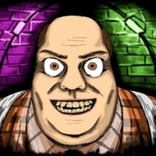
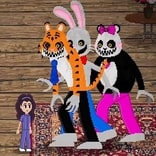
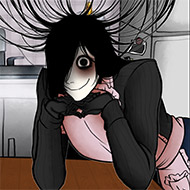
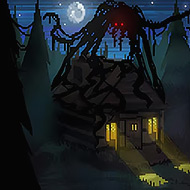
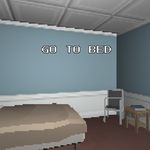
Go To Bed looks like a checklist and plays like a trap. The premise is exactly what the name suggests: you are inside a house, the night is closing in, and your job is to secure everything before getting into bed. Lock the front door. Check the windows. Work through the routine. Players who approach this the way they would a household task simulator spend their first run learning the hard way that someone already knows the layout of the house, and that the checklist is being watched.
| Genre | Indie horror, PSX-aesthetic |
| Platform | Windows (itch.io), limited Mac build |
| Structure | 3 situations (Subject A, B, C) plus endings |
| Endings | Multiple, determined by situational choices |
| Length | 15–30 minutes per run |
Go To Bed opens with Situation 1, and the framing is deliberately mundane. Subject A needs to lock up before bed. The player walks through a residential interior, interacts with doors and windows, listens for anything out of place. The atmosphere is built entirely from environmental cues — the PSX-style low-resolution visuals, the way certain rooms feel slightly wrong in their geometry, the silence that sits between ambient sounds. Nothing is announced as dangerous. The game trusts you to start feeling uneasy on your own.
What Situation 1 is actually doing is establishing the rules. Which actions matter. What the game counts as a completed step. Players who go through this section paying close attention — looking at every window, trying every interaction — carry a significant advantage into Situation 2. Players who rush, or who assume that locking the front door is the whole job, tend to discover what they missed at the worst moment. The community shorthand for this is the “did I get everything” anxiety loop, because the game is very good at making you uncertain even when you have done everything correctly.
The sound design does most of the horror work in Situation 1. There are no guaranteed jump scares timed to music stings. What happens instead is a gradual accumulation of small audio cues — a sound that might be the house settling, a creak from a direction you just checked — that make the act of walking back to the bedroom feel like it takes twice as long as the walk out. Players who use headphones consistently report a different experience than those who play through laptop speakers, and the community recommends headphones for a first run without qualification.
Situation 2 introduces Subject B and begins the game’s main structural move: the checklist you are following starts to work against you. Not in an obvious way — not with loud misdirection or instant failures — but in the way that a task you think you completed starts to feel uncertain when you have to account for it later. Go To Bed is good at making players second-guess actions they remember taking. The community term for this is getting gaslit by your own checklist, and Situation 2 is where that starts in earnest.
The layout of Subject B’s environment is deliberately familiar in shape but wrong in specific ways. Players who internalized Situation 1’s geometry will notice the differences, and those differences matter. The game uses the expectation of similarity to create moments where the player is confident they have secured something that has not actually been secured. This is not cheap — it rewards players who pay attention to what is actually in front of them rather than running on autopilot from the previous situation.
One concrete observation that only becomes clear after playing: the moment in Situation 2 when you return to check something you locked earlier and find it in a different state is not a bug. Several players on first runs have spent time trying to figure out what went wrong with their system or whether the game has a glitch. It does not. That moment is the game saying something specific about Subject B’s situation, and understanding it changes how the reveal at the end of Situation 3 lands.
Situation 3 is the reason Go To Bed has a dedicated community of players who have played through it multiple times. Without giving away the specific structural turn, Situation 3 recontextualizes the work you have been doing across the first two situations in a way that makes most players want to immediately replay from the beginning. The community describes this as the flip, and it is the most talked-about element of the game in every playthrough thread and video comment section.
What Situation 3 demands mechanically is calm. Players who rushed through Situations 1 and 2 tend to carry that momentum into Situation 3 and discover that speed is a liability. The game’s conclusion requires patience with its own pacing — pressing through too fast, trying to skip the environmental reading that earlier sections built up as a skill, will cause you to miss what the flip is actually showing you. First-time players who reach Situation 3 without understanding what Subject C’s space is telling them often reach an ending without knowing why they got it.
Go To Bed is short enough — most runs land between 15 and 30 minutes — that replaying to test different approaches in Situation 3 is low-cost. The community has mapped out the multiple endings and their determinants across hundreds of comment threads on the game’s itch.io page, but first-time players are strongly advised to avoid those threads until after a clean run. The game’s specific texture comes from not knowing what the flip is until it happens.
The core success of Go To Bed is that it takes a genuinely relatable anxiety — the feeling of being in bed and not being certain you locked everything — and uses it structurally rather than just atmospherically. The checklist mechanic is not decoration. The security routine is the game, and the horror comes from that routine being turned back on the player in ways that feel specific rather than generic. Players who have the real-world habit of double-checking their locks before bed consistently report the game landing harder than it has any right to for its length.
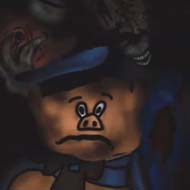
The divisive element is the antagonist’s movement animations, which some players find comical rather than frightening when the creature approaches after a failed run. This is the most common criticism across reviews, and it is fair — there is a visual incongruity between the atmospheric tension the game builds and the way the threat looks in motion. The creator acknowledged this in comments. It does not ruin the experience, but it does deflate the ending of a failed run in a way that a more polished animation pass might avoid.
The reason the community keeps returning to Go To Bed despite this is that the flip in Situation 3 is genuinely good writing for an indie horror short. Players who find the animation unconvincing still talk about the moment the game’s structure becomes clear as something that worked on them emotionally. Puzzle-oriented horror players in particular — those who play for the mechanics-as-metaphor aspect rather than pure scare delivery — are the audience this game was built for.
Go To Bed has multiple endings determined by how you handle the security checks across all three situations and how you navigate the choices in Situation 3. The community documentation on itch.io tracks two main endings and at least one additional outcome depending on actions taken during Subject C’s sequence. The endings differ not just in outcome but in what information they give the player about the full picture of what was happening across all three situations. Getting the full picture is the motivation most players cite for completing more than one run.
Situation 3 takes place in a space that resembles the earlier environments in certain structural ways but is occupied by Subject C, who is presented as a distinct person from Subjects A and B. The creator confirmed in itch.io comments that each situation is intended to follow a different individual. The similarity of the layouts is intentional — it sets up the player’s expectations in a specific way that the game uses for its reveal. Treating each situation as a genuinely separate person’s home rather than variants of the same house is the reading that makes the ending land most forcefully.
Survival is not primarily about evasion — it is about completing the security checklist correctly before the creature has reason to enter. Go To Bed is built around the principle that a secured house does not require surviving a chase. Players who find themselves in a chase sequence have usually missed a step in the routine earlier in the situation. The community advice is to move slowly and check everything, using audio cues to track whether anything in the environment has changed between visits to the same room. Running through the checklist quickly to “get it done” is the most common reason players fail — the game rewards thoroughness, not speed.
Go To Bed rewards the instinct that most players try to suppress: the compulsive need to go back and check one more time. Every room that Subject A, Subject B, and Subject C move through before the flip has something to tell you if you are willing to read it slowly, and the security routine that begins as a simple task becomes, by Situation 3, the central mechanism through which the game’s real story becomes visible. For a short horror experience built around a nightly ritual, it lands with a specificity that longer games rarely match.