BEST GAMES

Little Misfortune
Fran Bow 4
Little Misfortune 2

Among the Sleep
SIMILAR GAMES

Little Misfortune Full Game

Night in the Woods

Little Nightmares 2025

Sally Face


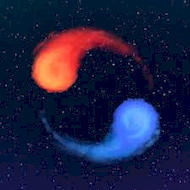
A Dance of Fire and Ice looks like a minimalist geometry toy but plays like a strict examination of whether your sense of rhythm survives contact with a shifting beat. Two orbiting planets — Fire and Ice — revolve around each other as they travel along a winding path of tiles, and your only job is to press one button. That single input has to land precisely when the orbiting planet reaches the center of the next tile. Miss the window, and both planets lose equilibrium, collide, and explode. There is no catch-up mechanic, no grace period, no safety net beyond what the game’s practice mode provides. Players who expect a laid-back music game routinely discover that A Dance of Fire and Ice is, by its own warning label, a hard rhythm game — and the game means it.
| Genre | Rhythm / Single-button precision |
| Platforms | PC, Mac, Linux, iOS, Android |
| Worlds (base game) | 13 Set Worlds + 15 Extra Worlds |
| DLC | Neo Cosmos (5 normal worlds + 4 EX worlds) |
| Input | Any single key or button |
| Post-game content | Speed Trials, Red Lantern Aim speeds |
Each world in A Dance of Fire and Ice is structured around a geometric concept. World 1 introduces straight lines and right angles — 90-degree turns, which the game maps to twice the speed of a whole note. World 2 introduces offbeats. By the time you reach the hexagonal and triangular patterns of later worlds, the visual shape of the path is encoding the rhythm directly: three 60-degree turns in a row form a triplet, and you can see it before you hear it. This is the game’s most praised design decision. Reading complex patterns geometrically is a skill that A Dance of Fire and Ice builds in you over dozens of runs, and the moment it clicks — when your eyes stop chasing the beat and start reading shapes — is the shift that separates early struggling players from those who eventually finish World 6’s boss stage and unlock the second half of the content.
Each world opens with a series of short tutorial stages that isolate the new pattern type, then closes with a full-song boss stage that chains every pattern together at speed. Completing Worlds 1 through 6 is the gate. Those six bosses unlock Worlds 7 through 12 and the Extra Worlds. Beating a boss also unlocks that world’s Speed Trial — the same boss stage played at adjustable speed, from slower than default all the way to speeds where the audio glitches because the engine isn’t designed to go that fast. Players who love competitive optimization spend enormous time in Speed Trials chasing the Aim speed for each world, which rewards a Red Lantern medal on completion.
The sound design deserves separate mention. Tracks by composers including Jade Kim and Hafiz Azman are built so that every beat corresponds to a tile. The game is precisely synced — it uses manual and auto-calibration systems specifically because the developers are musicians and off-sync rhythm games bother them. When you hear a song in A Dance of Fire and Ice and then play it, the two experiences reinforce each other in a way that most rhythm games manage only inconsistently.
The most common failure for new players is using their eyes instead of their ears. Because the path is visual — a curving, rotating track of tiles — the instinct is to watch for when the planet reaches the center of a tile and then press. This visual approach breaks down almost immediately. Camera rotation, perspective shifts, and speed changes make visual timing unreliable. The game’s own documentation and community guides repeat the same instruction: use your ears. The beat is the cue. The geometry is a reading aid, not a timing reference.
A second issue is calibration. A Dance of Fire and Ice includes an auto-calibration method, and first-time players who skip it or rush through it will consistently find their presses landing slightly late or early without understanding why. A few minutes spent on calibration — particularly for players on displays with input lag — makes an immediate, concrete difference. Players on competitive setups and players on regular laptop screens have genuinely different experiences of what counts as “on time” in this game.
The third thing beginners get wrong is not using the practice mode. Every level has a practice feature that lets you select any specific segment, loop it, and slow it down. Players who restart from the beginning every time they hit a hard section waste enormous effort on the early patterns they have already internalized. Isolation practice on the section that is actually causing failures is the method the game’s community consistently recommends, and it is the method that actually shortens learning time. Rhythm game veterans sometimes resist this because they are used to games that don’t offer it — in A Dance of Fire and Ice, the practice mode is not optional scaffolding, it is core design.
The first six worlds of A Dance of Fire and Ice operate on a principle of controlled introduction. Each adds one new pattern type and builds the boss stage around combinations of everything seen so far. The difficulty is real — World 6’s boss is where many casual players stop — but the learning path is logical. You know what is coming because the tutorial stages have shown you the pieces.
Worlds 7 through 12 remove that comfort. Pattern combinations become denser, speed shifts arrive without warning, and the path geometry becomes harder to read at pace. The Extra Worlds are where A Dance of Fire and Ice earns its reputation among dedicated rhythm game players. Extra World MO-X, titled EMOMOMO and built around a Muse Dash crossover track, is one of the first levels where most players instinctively reach for a second key and begin alternating fingers — the speed of the corners demands it. This is the community’s informal marker for when a level has crossed into serious difficulty.
The Neo Cosmos DLC sits in a different category. The developers recommend completing Worlds 1 through 12 before attempting it, and the recommendation exists for good reason. Neo Cosmos introduces Midspins — a mechanic where a tile requires a timed press mid-orbit rather than at the tile center — and the DLC’s five story worlds use this and other new mechanics in ways that assume fluency with the base game’s entire vocabulary. The EX versions of Neo Cosmos worlds, unlocked through Gold Clear Medals, are harder again, and the highest-difficulty EX stage has over a thousand tiles — the most of any official level in the game.
The most impactful advanced technique in A Dance of Fire and Ice is two-key alternation. The game is designed around a single input, and one button is sufficient for most of the base game. But at high speeds — particularly in Speed Trials above the default and in Extra Worlds — the interval between required presses becomes short enough that a single finger cannot reliably hit consecutive beats without misfiring. Players who master alternating between two keys on fast sections have a measurable advantage in consistency. This is not officially required, but it is what competitive players and 100% hunters use.
A second technique is pattern anticipation. Every geometric shape in the game encodes a predictable rhythm. A square produces four evenly spaced beats. A triangle produces three beats at a different interval. Once players have internalized the feel of each shape’s rhythm, they can begin anticipating the press timing before the path geometry becomes fully visible on screen. This is what separates players who react to tiles from players who move with the music — the latter are reading the incoming shape and preparing the timing in advance rather than responding to what has already arrived.
Speed Trial runs are a community point of division. Some players love them as a true test of ceiling — chasing the Red Lantern Aim speed for each world is a significant time investment that rewards precise calibration and consistent execution. Others find the Speed Trial loop repetitive and feel the satisfaction plateau quickly. This is an honest split in how the game’s post-game content lands, and players who are primarily interested in the song collection rather than the speed-based challenge often finish the six main worlds and move on without feeling they have missed something essential.
A Dance of Fire and Ice has a full level editor on PC and an active Steam Workshop with a vast number of community-made custom levels. The Workshop is where the game’s longevity lives for players who have finished every official world. Custom levels vary enormously in quality — from carefully crafted maps with original arrangements to technically interesting experiments that prioritize mechanical novelty over playability. The community has developed its own standards for what makes a good custom level, and well-regarded Workshop uploads are often discussed and recommended on Discord and Reddit alongside the official worlds.
The game also has a Recommended Level system where the developers contract particularly strong custom levels into the official game. These recommended levels can be found in the custom level menu on Steam and are treated by the community as carrying a quality guarantee. Players who want more of what the official Extra Worlds feel like but have exhausted that content generally start here before diving into the broader Workshop catalog.
Neo Cosmos added new editor events specific to its mechanics, which has allowed community creators to build levels with Midspins and the DLC’s other gimmicks. The result is a separate layer of Workshop content that requires Neo Cosmos ownership to play but gives DLC-owning players a significantly expanded pool of levels that use the expanded mechanic set.
Players of A Dance of Fire and Ice almost universally abbreviate the title to ADOFAI — pronounced as a word, not as letters. The community distinguishes between “vanilla” (the base game without Neo Cosmos) and the DLC content. Players talk about “hitting a perfect” on a tile and about “desyncing” when calibration drift causes timing to feel off. Speed Trial culture has its own vocabulary around “Aim speed” — the specific target speed per world that grants the Red Lantern — and players track and share their Aim clears on Discord servers dedicated to the game.
The most discussed frustration point in the community is the Midspin mechanic from Neo Cosmos. Because Midspins require a press during the orbit arc rather than at the expected tile center, players trained on vanilla ADOFAI instincts regularly misfire on Midspin tiles even after understanding the mechanic conceptually. The transition from knowing what a Midspin is to executing it consistently under pressure is a genuine skill gap that the community openly acknowledges. Charla Tan, the Neo Cosmos character who introduces Midspins in the DLC’s story, has become something of an ironic symbol for this frustration — mentioned by name whenever players complain about Midspin sections in hard levels.
This is almost always a calibration issue. A Dance of Fire and Ice relies on precise sync between audio and input, and display lag, Bluetooth audio, or audio output settings can all shift the effective window without making it obvious. The auto-calibration method handles most setups, but players using wireless headphones or high-latency displays typically need to use manual calibration and adjust by feel over several runs. If your presses feel late, adjust the offset earlier; if they feel early, move it later. Even a few milliseconds of drift causes consistent late or early hits on fast sections.
No. The base game has more than 20 worlds, Speed Trials, and Steam Workshop access, which represents far more content than most players complete before the DLC becomes relevant. Neo Cosmos is recommended only after clearing Worlds 7 through 12, because its mechanics — including Midspins and the multi-planet sections — are designed for players who have already internalized the full vocabulary of the base game. Players who attempt Neo Cosmos too early often find the Midspin introduction frustrating rather than rewarding, not because the mechanic is poorly explained, but because executing it cleanly requires a reflex baseline that the base worlds are designed to build.
Yes, but it requires completing Speed Trials at the Aim speed for each world to earn Red Lanterns, which is a significant commitment. The Aim speeds are set high enough that most casual players never reach them in normal play. Achieving 100% also requires completing Neo Cosmos including EX worlds if you own the DLC. The top-difficulty EX stages — particularly the EX version of No Hints Here! in Neo Cosmos — are among the hardest official content in the game and represent a ceiling that even experienced ADOFAI players work toward for extended periods.
The core appeal of A Dance of Fire and Ice is that it teaches a genuinely new skill — reading rhythm through geometry — rather than testing a skill you already have. Once Fire and Ice lock into sync and a difficult pattern finally lands cleanly, the satisfaction is immediate and specific in a way that pure reflex games rarely match. The practice mode, calibration tools, and the steady geometric logic of the world structure give players a real path from struggling with a 90-degree turn in World 1 to eventually reading the dense corner chains of EMOMOMO — and that path, however long it takes, is the actual game.